
Understanding Broken Sewer Line Repair Tulsa: Diagnostics, Methods, and Costs
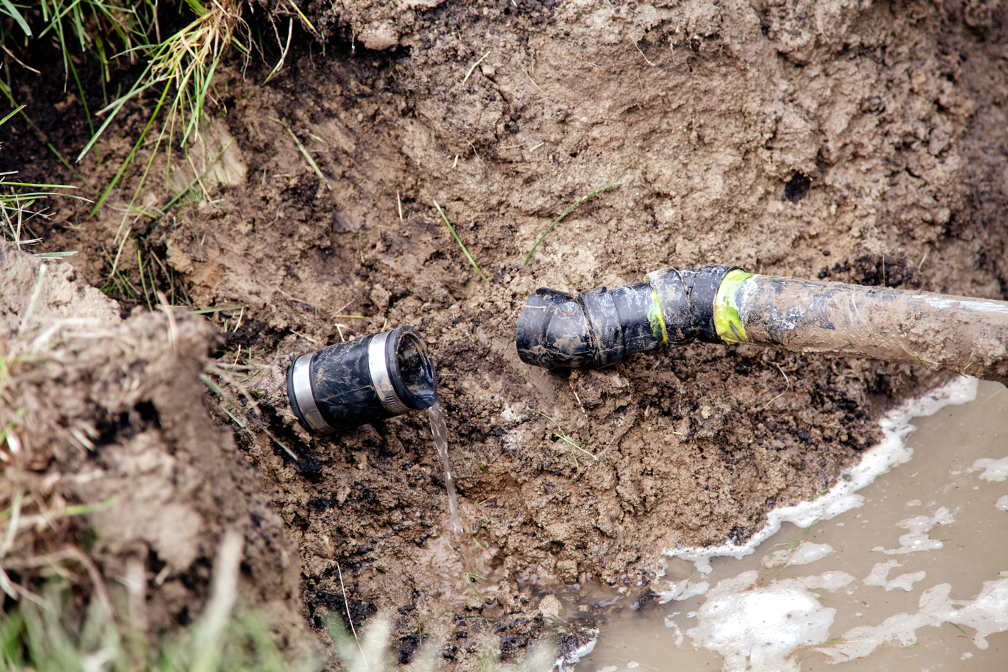
A malfunctioning main waste line is one of the most disruptive emergencies a homeowner in Green Country can face. Because the main wastewater pipe is buried deep beneath lawns, driveways, or concrete structural slabs, structural damage to this line can quickly cause raw sewage backups, structural foundation instability, and expensive property damage. Securing a swift, professional broken sewer line repair Tulsa plumbing specialists execute is essential to protecting your property’s long-term integrity, family safety, and daily comfort.
Understanding how a mainline failure occurs, recognizing early warning signs, and selecting the correct replacement technology are critical steps for any property owner. The infrastructure throughout older Tulsa communities ranging from historic homes in Midtown to rapidly growing suburban areas in Owasso, Broken Arrow, and Sapulpa presents unique subsurface plumbing challenges. Variations in soil composition, shifting moisture levels, and aging pipe materials require specialized diagnostic techniques and modern mechanical solutions to ensure lasting repairs.
Mainline Pipe Repair and Technology Matrix
| Repair Method | Surface Disruption | Average Longevity | Best Applied For |
| Traditional Excavation | High (Open trenching across landscape) | 50+ Years | Collapsed runs, severe bellies, off-grade lines |
| Trenchless Pipe Bursting | Minimal (Two small access points) | 50 to 100 Years | Intact pathways needing structural upsizing |
| Cured-in-Place Pipe (CIPP) | None (Accesses existing cleanouts) | 50+ Years | Moderate cracking, root incursions, missing bottom sections |
| Spot Repair / Sectional | Localized (Targeted digging) | 30+ Years | Isolated damage from tree roots or vehicle weight |
The Primary Drivers of Mainline Failures in Northeastern Oklahoma
Residential waste systems do not fail at random; rather, they succumb to a combination of aging materials, aggressive biological forces, and specific geological characteristics native to the region. Homeowners seeking a broken sewer line repair Tulsa professional service must address the underlying cause of the breakdown to prevent recurring issues down the road.
Volatile Clay Soil Movement
The geography of northeastern Oklahoma contains significant deposits of expansive clay soil. This earth acts like a sponge, swelling drastically during heavy rainstorms and shrinking during dry summer months. This constant movement exerts immense physical pressure on buried utilities. Over time, this shifting ground can cause rigid plumbing pipes to fracture, shear, or sag, resulting in low spots known as “bellies” that catch solid waste and cause frequent backups.
Invasive Tree Root Penetration
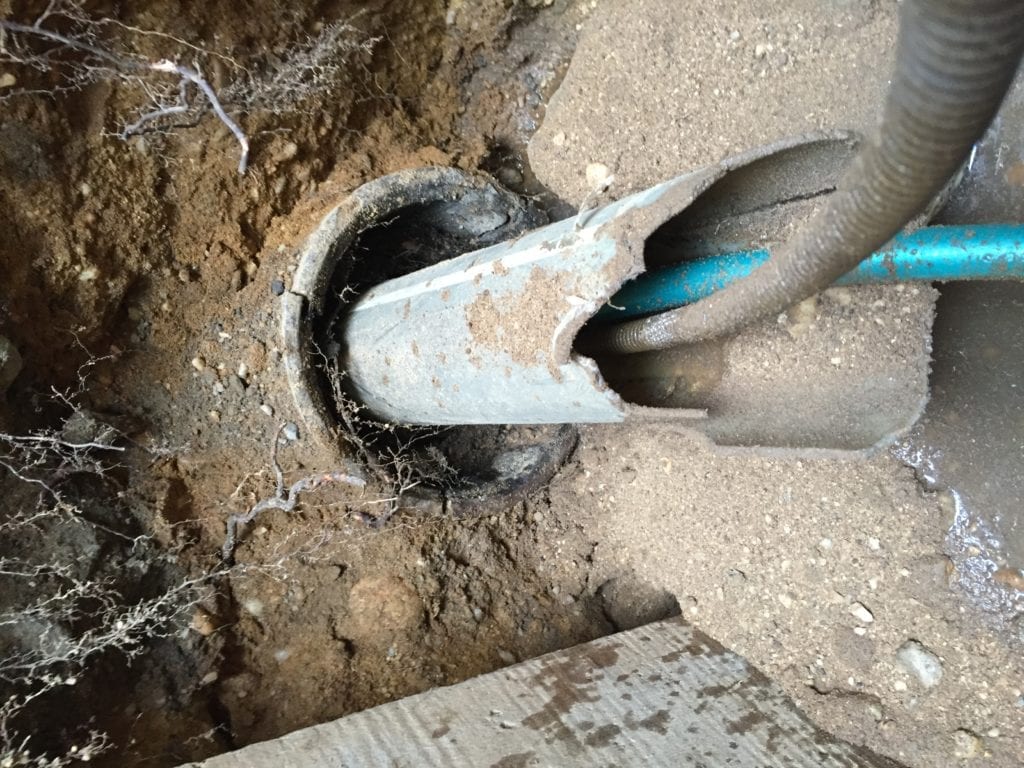
Tree roots possess an incredible ability to locate moisture underground. The microscopic joints and couplings of older pipes release warm, moisture-rich vapors that attract nearby roots. Once a root hair finds a small crack or loose seal, it pushes inside and expands rapidly. As the root grows, it creates a massive internal obstruction and splits the pipe from the inside out, making a professional broken sewer line repair Tulsa intervention absolutely necessary to clear the blockage and restore structural integrity.
Corrosive Subsurface Materials
Depending on when your property was built, your mainline may consist of clay, cast iron, or cast-stone composite. Cast iron pipes are prone to internal rust scaling and channeling, where the bottom of the pipe slowly erodes away due to decades of wastewater flow. Older clay pipes are naturally brittle and prone to structural collapse under weight. Identifying these failing materials early allows homeowners to plan repairs before a total system collapse occurs.
Advanced Diagnostic Strategies: High-Definition Mainline Inspections
Modern technology has eliminated the need for plumbers to guess where a subterranean problem lies. Specialized diagnostics are the foundation of any reliable broken sewer line repair Tulsa project. Experienced technicians utilize self-leveling, high-definition fiber-optic cameras attached to flexible push-rods to explore the entire interior system in real time.
During a sewer camera evaluation, the diagnostic tool is inserted through an accessible exterior cleanout or an interior plumbing vent. As the camera travels down the line, a clear monitor displays the internal condition of the line, allowing technicians to locate structural defects down to the exact foot. This precision allows team members to identify:
- The exact location and depth of root masses or blockages.
- Structural shifts, displaced rubber seals, or collapsed pipe sections.
- The type of pipe material and its level of structural wear or corrosion.
This clear visual data ensures property owners see the exact issue before any digging or lining begins. This transparency is crucial for accurate flat-rate pricing, ensuring homeowners pay only for the necessary fixes without hidden surprise fees.
Comparing Solutions: Traditional Excavation vs. Trenchless Technology
Once a mainline break is confirmed, the next step is choosing the best repair technique for your property. Modern plumbing companies offer both traditional excavation and innovative trenchless methods to balance budget considerations and landscaping preservation.
Traditional Open-Trench Excavation
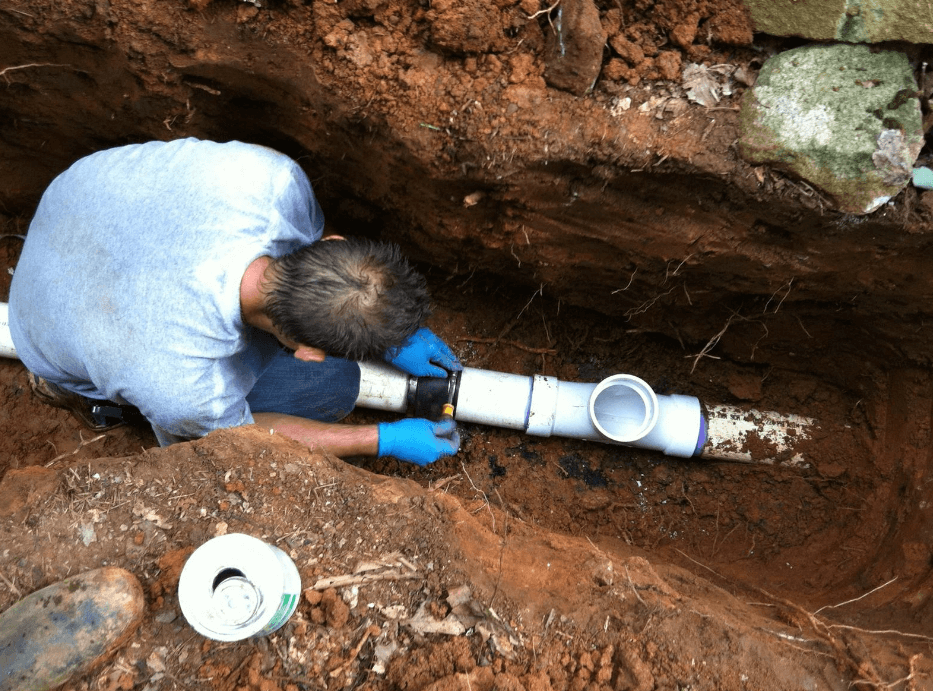
Traditional repair requires heavy equipment to dig an open trench directly down to the broken line. While this method is highly disruptive to lawns, driveways, and landscaping, it remains necessary in certain situations. If a pipe has completely collapsed, flattened, or suffered a severe back-pitch belly, a technician must physically remove the damaged section and lay a new PVC line to guarantee proper gravity flow.
Trenchless Pipe Bursting
For homeowners looking to protect pristine lawns or expensive hardscapes, trenchless line repair provides a low-impact alternative. Pipe bursting uses a powerful hydraulic machine to pull a high-density polyethylene (HDPE) replacement line directly through the old, damaged pipe path. A hardened steel bursting head shatters the old clay or cast iron pipe outward while pulling a brand-new, seamless line into place behind it, leaving your landscaping virtually untouched.
To learn more about the strict structural guidelines, safety standards, and environmental regulations governing public and private waste systems, homeowners can consult the updated consumer resources provided by the Environmental Protection Agency. Their guidelines highlight the long-term environmental benefits of seamless, leak-free HDPE piping in residential areas.
Immediate Steps to Take During a Mainline Emergency
Discovering raw sewage backing up into your bathtubs, showers, or floor drains is a stressful situation that requires immediate action to protect your home. Managing the crisis effectively before a professional crew arrives can significantly reduce water damage and clean-up costs.
First, turn off your home’s main water supply valve immediately. Stopping the flow of incoming water prevents additional wastewater from filling your drains and overflowing into your living spaces. Next, instruct everyone in the household to stop flushing toilets, running faucets, washing dishes, or operating the washing machine until the system has been cleared and repaired.
Avoid using chemical drain cleaners to resolve a main line clog. These harsh chemicals are ineffective against deep root blockages or broken pipes; instead, they sit in stagnant pools within your plumbing, creating a hazardous environment for the technicians who must handle the system physically. Instead, contact a plumbing service provider that offers 24/7 emergency service to dispatch a technician to your door right away. For a deeper look at the complete scope of emergency services and hydro-jetting maintenance programs available, visit the Wooten Plumbing Services Directory to schedule an immediate inspection.