Shifting Foundation Plumbing Fixes: The Tulsa Homeowner’s Guide
A home’s foundation and its plumbing system share a deeply codependent relationship. When a residential or commercial structure is built, the intricate network of supply lines and sewer drains is laid out directly beneath or through the concrete slab. For property owners in Tulsa, Oklahoma, this architectural design faces a continuous environmental threat: volatile subterranean earth. When the ground beneath a house moves, it puts immense mechanical stress on rigid pipes, frequently leading to hidden leaks, broken joints, and catastrophic water damage.
Dealing with a moving house is stressful enough, but when structural movement begins to snap your drain lines, you need targeted, professional shifting foundation plumbing fixes to protect your property from rotting from the under-slab level upward.
Ignoring the intersection of structural shifting and plumbing failure is a recipe for exponential repair bills. A minor subgrade leak can slowly wash away the supporting soil beneath your slab, accelerating the rate of your foundation’s failure and causing your floors to drop or crack unevenly. This comprehensive guide will analyze the mechanical relationship between Tulsa’s soils and your plumbing infrastructure, outline key indicators of structural pipe failure, and explore the advanced repair methodologies utilized by master plumbers to stabilize your home’s essential systems.
The Root Cause: Why Tulsa Soil Destroys Under-Slab Plumbing
The foundational plumbing issues experienced across northeastern Oklahoma are primarily dictated by regional geology. Tulsa and its surrounding communities sit on top of highly expansive clay soils, often mixed with volatile shale formations. This specific soil type acts like an active subsurface accordion, dramatically changing its volume based on local weather conditions.
During periods of heavy spring rainfall or sudden flash flooding, the clay particles absorb immense volumes of water, swelling significantly and exerting thousands of pounds of upward force against your concrete foundation a process known as soil heaving.
Conversely, during intense summer heatwaves and prolonged droughts, the moisture completely evaporates from the earth. The clay shrinks, pulls away from the foundation perimeter, and creates hollow subterranean voids. As the heavy concrete structure settles into these newly formed empty gaps, it moves unevenly.
Because your plumbing pipes are rigidly held in place by the concrete slab above or buried deep within this shifting soil matrix, this continuous up-and-down movement shears copper water lines, cracks rigid PVC sewer pipes, and breaks the joints connecting your internal fixtures to the main municipal line.
Quick Reference: Structural Stressors & Repair Protocols
When structural shifting compromises your underground utilities, the repair strategy must match the specific type of pipe failure. Review this technical matrix to understand the common failure points and corresponding engineering fixes:
| Failure Type | Primary Mechanism | Visual Warning Signs | Recommended Technical Fix |
| Sheared P-Trap or Joint | Structural dropping forces a rigid connection to snap clean at the slab line. | Unexplained foul odors, localized damp spots on flooring. | Under-slab tunneling or isolated floor breakout with PVC replacement. |
| Slab Supply Leak | Friction from soil movement rubs a hole into pressurized copper lines. | Warm spots on the floor, continuous running water meter, spiking bills. | Electronic acoustic leak detection followed by a clean pipe bypass routing. |
| Main Line Belly | Soil settling leaves a sewer line unsupported, causing it to sag or dip. | Recurring bathroom backups, gurgling toilets throughout the home. | Hydro-jetting clearing followed by structural trenchless pipe lining (CIPP). |
| Pipe Shearing | Violent soil heaving shifts two sections of a pipe in opposite directions. | Sudden sinkholes in the yard, localized structural wall cracking. | Pipe bursting replacement or traditional targeted excavation. |

Key Indicators That Foundation Shifting Has Broken Your Plumbing
Because your main plumbing lines are buried beneath feet of compacted earth and solid concrete, identifying a structural pipe failure requires looking for subtle indirect clues. Property owners should remain highly vigilant for these four critical warning signs:
1. Spiking Water Utilities and Active Meters
If your monthly municipal water bill takes a sudden, unexplained jump, you likely have a pressurized leak beneath your slab. To verify this, turn off every single faucet, appliance, and hose bib inside and outside your home, then walk out to your property’s water meter box. If the small low-flow indicator dial or digital readout is continuously spinning or counting up, water is actively escaping somewhere in your system—frequently from a copper line warped and cracked by foundation movement.
2. Isolated Warm Spots on Slab Floors
Most residential copper supply lines carry cold water, but your hot water lines also run beneath the concrete floor. When a hot water line cracks due to structural stress, the pressurized water saturates the surrounding soil and radiates heat upward through the concrete slab. If you step onto a specific section of your hardwood, laminate, or tile flooring and notice a distinctly warm or hot patch underfoot, it is a primary indicator of an active under-slab hot water leak.
3. Lingering Sewer Odors and Wet Flooring
While a supply leak involves pressurized freshwater, a broken drain line involves wastewater. If foundation movement snaps a sewer joint beneath your home, sewage will pool underneath the slab. Over time, the moisture will wick upward through the porous concrete, ruining your carpets, buckling hardwood planks, or releasing a distinct, sulfurous sewer gas odor into your living areas.
4. Rapidly Accelerating Foundation Cracks
Water is the ultimate catalyst for structural failure. If a pipe breaks beneath your home, the constant stream of escaping water will rapidly liquefy and wash away the supporting subsoil. This accelerated erosion deprives your concrete slab of its foundational base, causing a section of the house to suddenly drop. If you notice interior drywall cracks, sticking doors, or exterior brick fissures expanding rapidly over a matter of weeks, an underlying plumbing leak is likely accelerating the structural damage.
Advanced Shifting Foundation Plumbing Fixes Explained
When a master plumbing team arrives to address a structurally compromised plumbing system, they utilize a sequence of advanced diagnostic and repair methodologies designed to fix the pipes permanently without causing unnecessary destruction to your home.
The Under-Slab Restoration Sequence
1.Execute Precision Electronic Leak Detection:10-15 min.
Plumbers never guess where a leak is located. Technicians utilize advanced acoustic listening equipment and specialized digital thermal imaging cameras to pinpoint the exact underground coordinates of the pipe failure through the concrete floor, minimizing the need for extensive structural exploration.
2.Perform a Clean Plumbing Bypass Routing:Non-destructive option.
If a pressurized water line buried deep inside a foundation slab is broken, the cleanest fix often involves abandoning the old pipe entirely. Technicians cap off both ends of the compromised underground line and route a brand-new, highly flexible PEX water line safely through your home’s walls or attic space, bypassing the foundation altogether.
3.Utilize Under-Slab Tunneling Tech:Preserves interior floors.
If a main sewer drain line breaks directly under the center of your home, you don’t have to jackhammer through your beautiful interior floors. Specialized crews dig an access pit outside your foundation beam and carefully tunnel horizontally underneath your home. This allows plumbers to replace broken PVC or cast iron from underneath, keeping your interior completely untouched.
4.Deploy Trenchless CIPP Pipe Lining:For structural sewer lines.
If a shifting foundation has cracked a long stretch of underground sewer pipe but the line still maintains its structural alignment, trenchless Cured-in-Place Pipe (CIPP) lining is highly effective. An epoxy-saturated liner is pulled through an existing cleanout, inflated, and cured to create a seamless, root-proof, and flexible pipe inside the old one.
5.Execute Void Filling and Subsoil Compaction:Post-repair mandate.
Once the physical shifting foundation plumbing fixes are completed and tested, the subterranean voids created by the leak or the tunneling process must be addressed. Technicians coordinate the injection of high-density, waterproof polyurethane foam or mudjacking slurry to fill the empty spaces, re-establishing a rock-solid support base for your concrete slab.

Coordinating Plumbing Repairs with Foundation Stabilization
If your home is actively moving, executing plumbing fixes is only half of the solution. If you repair a broken sewer pipe but fail to stabilize the structural foundation, the house will continue to settle, inevitably snapping your newly installed pipes all over again.
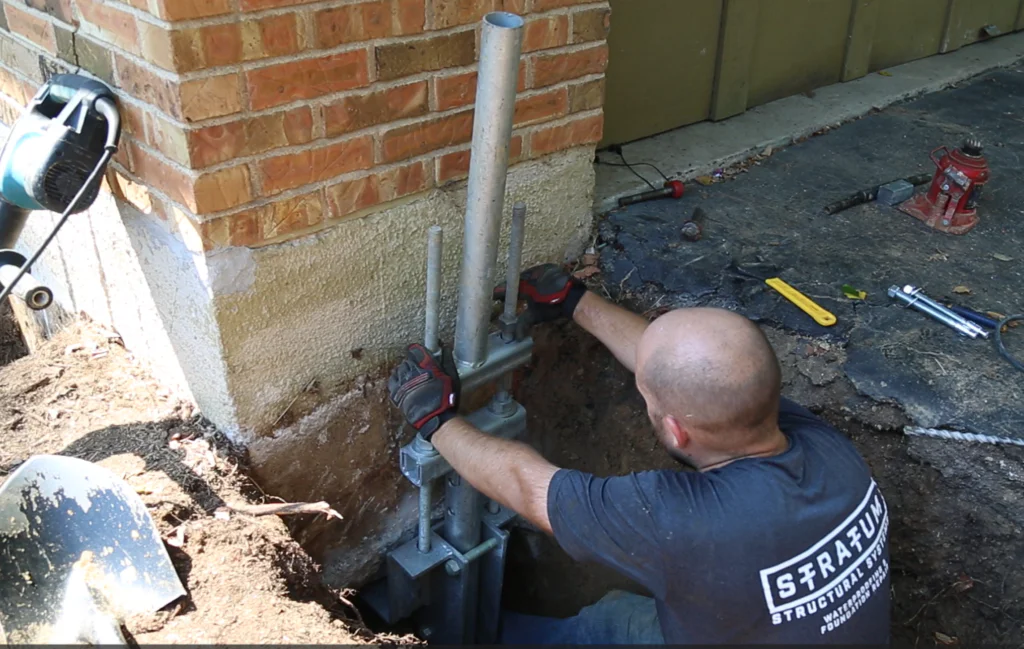
Conversely, if a foundation repair company tries to hydraulically lift your home using steel piers before checking for plumbing leaks, the physical lifting process can easily stretch and snap aged under-slab utilities.
The ultimate strategy requires a synchronized, collaborative approach. First, a professional hydrostatic pressure test should be executed to map out any existing leaks. Next, the foundation should be stabilized and leveled by certified structural professionals. Finally, once the structure is completely stable and locked into its permanent position, the plumbing team should execute the final under-slab repairs and trenchless lining. This specific operational sequence ensures your new plumbing system is never exposed to further unexpected structural movement.
According to structural construction guidelines established by organizations like the American Society of Civil Engineers (ASCE), managing consistent soil moisture balance around a building’s perimeter is the most effective way to mitigate the destructive cycle of foundation shifting and subsequent utility failure over time.