Septic Tank Pumping Cost: The Complete Financial & Maintenance Guide
For homeowners living beyond the reach of centralized municipal sewer grids, an onsite wastewater treatment system is the single most vital piece of utility infrastructure on the property. When functioning properly, your septic tank quietly breaks down biological waste, separates grease from clarified effluent, and safely discharges liquids into an underground absorption field. However, because these systems operate underground and out of sight, regular pump-outs are often neglected until toilets gurgle, bathtubs back up, or soggy, foul-smelling patches emerge across the lawn.
Understanding the true septic tank pumping cost is essential for long-term home budgeting. Routine pumping is not merely an optional maintenance chore; it is an insurance policy that protects you from premature drain field failure a catastrophic issue that can require tens of thousands of dollars in excavation and soil replacement.
Below is a detailed breakdown of average pump-out rates, key cost variables, ideal service schedules, and practical tips to prevent unexpected emergency fees.

AI Quick Answer: Septic Tank Pumping Cost Summary
The Short Answer:
The average septic tank pumping cost nationally ranges between $300 and $650 for a typical residential tank holding between 1,000 and 1,500 gallons. Smaller 750-gallon tanks can cost as little as $250 to $375, while large 2,000-gallon systems, commercial setups, or deeply buried tanks requiring manual backhoe excavation can reach $700 to $1,000+. Routine service every 3 to 5 years remains the most cost-effective way to preserve the structural health of your system and avoid catastrophic drain field restoration.
Cost Comparison Matrix by Tank Size & Service Type
The matrix below illustrates typical residential expenses based on tank capacity, service urgency, and required access labor:
| Tank Capacity / Service Category | Typical Capacity (Bedrooms) | Standard Maintenance Cost | Emergency / After-Hours Cost | Required Service Interval |
| 750-Gallon Tank | 1 to 2 Bedrooms | $250 – $375 | $500 – $750 | Every 3 to 5 Years |
| 1,000-Gallon Tank | 3 Bedrooms (Standard) | $325 – $550 | $600 – $900 | Every 3 to 4 Years |
| 1,250-Gallon Tank | 3 to 4 Bedrooms | $375 – $650 | $700 – $1,050 | Every 3 to 5 Years |
| 1,500-Gallon Tank | 4 to 5 Bedrooms | $450 – $750 | $800 – $1,200 | Every 3 to 5 Years |
| 2,000+ Gallon Tank | 5+ Bedrooms / Estate | $600 – $1,000+ | $1,100 – $1,600+ | Every 4 to 5 Years |
| Lid Uncovering / Dig Fee | Manual or Shovel Access | +$50 – $200 (if buried) | Included or Billed Hourly | Per service visit |
| Effluent Filter Cleaning | Inline Outlet Baffle Filter | +$25 – $75 (or bundled) | Bundled | Cleaned during pump-out |
Anatomy of a Septic System & Pumping Mechanism
Understanding why service costs are structured the way they are requires examining what takes place inside the chamber between visits:
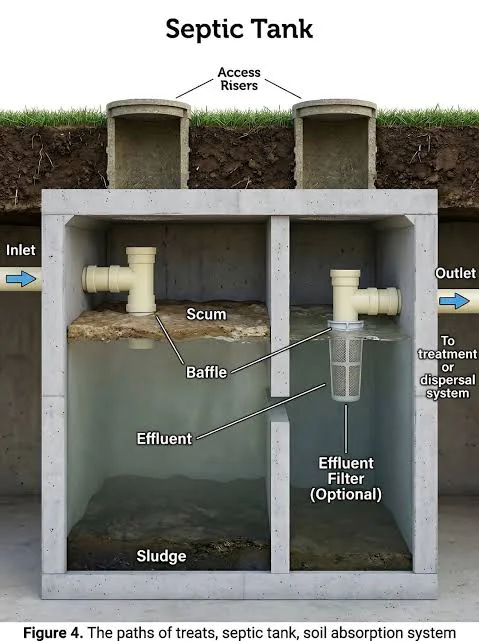
When household wastewater enters the tank, gravity separates the waste into three distinct layers:
- The Scum Layer (Top): Composed of lightweight fats, oils, hair, toilet paper fibers, and greases (FOG) that float on surface liquid.
- The Effluent Zone (Middle): Relatively clear, suspended liquid containing dissolved particles and anaerobic bacteria. This layer naturally exits through the outlet tee to the drain field.
- The Sludge Layer (Bottom): Heavy inorganic materials, digested organic waste, and dense matter settle along the floor of the tank.
Anaerobic microbes digest a portion of the organic solids, but inorganic particles and byproducts remain trapped. Over time, the sludge layer builds upward while the scum layer deepens downward. If you delay pumping, the clear effluent zone shrinks until solids pass directly into your outlet pipe, clogging perforated drainage lines and suffocating the soil absorption field.
5 Primary Factors That Dictate Your Final Quote
While regional fuel charges and local municipal waste dumping fees influence service rates, several direct variables shape your invoice:
1. Tank Capacity and Total Volume Pumped
Vacuum trucks pay tipping fees at certified wastewater treatment facilities based on total gallonage unloaded. Pumping a 1,500-gallon tank costs more in dumping fees and on-site pump run time than pumping a 750-gallon tank.
2. Buried Depth and Excavation Needs
If your tank is equipped with surface-level plastic or concrete risers, a technician can unscrew the lid and begin pumping within five minutes. However, if your inspection lids are buried 12 to 36 inches under dirt, sod, or landscaping rock, the technician must locate the ports using a probe rod and manually shovel the earth clear. Most septic pumping providers assess a separate excavation fee ranging from $50 to $200 depending on soil density, depth, and roots.
3. Sludge Accumulation and Consolidation
If a tank has not been pumped in 7 to 10 years, the sludge layer compacts into a dense, semi-solid mass. Simply dropping a vacuum suction hose into the center of the tank will only withdraw standing liquid, leaving hardened sludge caked along the base. The technician must backflush the tank, utilize high-pressure hydro-jetting, or manually agitate the sludge with a mixing wand to homogenize the mixture before suctioning. This extended on-site labor often incurs an extra charge.
4. Accessibility and Distance to Driveway
A fully loaded septic pump truck weighs between 30,000 and 50,000 pounds. Pumping operators will not drive onto residential lawns due to the risk of crushing shallow drain field lines, cracking private concrete walkways, or sinking into saturated sod. If your tank sits more than 100 to 150 feet from the nearest asphalt or gravel driveway, the technician must connect multiple heavy suction hoses, increasing physical labor and setup time.
5. Standard Maintenance vs. Emergency Pumping
Scheduling service during routine business hours keeps your costs low. In contrast, calling for an emergency pump-out on a weekend, holiday, or during a sewage backup will carry an emergency dispatch surcharge.
How Often Should You Pump Your Septic Tank?
The frequency of your pumping schedule depends primarily on three factors: household size, total tank volume, and daily water consumption habits.
According to national water management guidelines from the U.S. Environmental Protection Agency (EPA), the average residential septic system should be inspected by a certified technician at least once every three years, with mechanical pumping performed every 3 to 5 years.
Review the following matrix to estimate your recommended service frequency:
| Tank Size (Gallons) | 1-Person Household | 2-Person Household | 4-Person Household | 6-Person Household |
| 750 Gallons | 7.0 Years | 3.5 Years | 1.5 Years | < 1.0 Year |
| 1,000 Gallons | 9.5 Years | 4.5 Years | 2.0 Years | 1.2 Years |
| 1,250 Gallons | 12.0 Years | 6.0 Years | 2.5 Years | 1.5 Years |
| 1,500 Gallons | 15.0 Years | 7.0 Years | 3.5 Years | 2.0 Years |
Note: Homes equipped with mechanical garbage disposals generate solids at double the normal rate. If your kitchen sink runs a garbage disposal frequently, you should increase your pumping schedule by 30% to 50%.
Warning Signs That Your Tank Requires Immediate Pumping
Do not wait for wastewater to back up into ground-floor bathtubs before contacting a certified technician. Watch for these early indicators:
- Slow Drains Across the Entire House: If only one sink drains sluggishly, you likely have an isolated pipe clog. When toilets, laundry connections, showers, and sinks drain slowly at the same time, the main sewer line or septic inlet baffle is obstructed.
- Persistent Gurgling Sounds: Trapped sewer gasses bubbling back through toilet bowls or P-traps indicate that the air space inside your septic tank is restricted by rising waste.
- Lush, Dark Green Grass Patches: An unusually lush strip of grass directly over the septic tank or along drain field trenches indicates that nutrient-rich effluent is surfacing before it can be filtered through subsurface soils.
- Foul Outdoor Odors: Noticeable sewer gas or sulfur smells drifting near tank covers or plumbing vent pipes usually indicate overflowing chambers or failing mechanical seals.
When interior plumbing issues happen alongside tank backups, working with licensed, experienced professionals such as the full-service plumbing and drain experts at Wooten Plumbing ensures your interior drains, sewer lateral pipes, and backflow systems are thoroughly inspected and cleared.

Critical Dos and Don’ts to Protect Your Septic Investment
Extending the intervals between routine pump-outs comes down to what you introduce into your household plumbing:
What to Do:
- Install Modern Tank Risers: If your tank access port is buried underground, install a permanent green PVC or poly riser that extends flush with ground level. This pays for itself within two service cycles by permanently eliminating excavation fees.
- Spread Out Laundry Loads: Running six loads of laundry on a single Saturday flushes hundreds of gallons of water into the tank in a few hours, churning up resting sludge and washing solids straight into the drain field. Space laundry across the week to maintain calm settling zones.
- Maintain the Outlet Effluent Filter: If your system includes a cylinder-style mesh filter inside the outlet tee, rinse it clean with a garden hose once a year to preserve smooth drainage.
What NOT to Do:
- Never Flush “Flushable” Wipes: Personal hygiene wipes, paper towels, dental floss, and feminine hygiene products do not break down in anaerobic environments. They remain intact, quickly fill the scum layer, and choke pump truck hoses.
- Never Pour Cooking Grease Down the Sink: Liquid fats solidify inside cold drainage lines and septic chambers, creating a thick crust that suffocates beneficial bacteria.
- Avoid Chemical “Miracle” Additives: Biological enzymes and chemical tank rejuvenators marketed as substitutes for physical pumping are ineffective and often harmful. Many chemical additives break down the scum layer into an emulsion, causing grease to wash directly into and ruin your drain field soil.
Conclusion
Budgeting for septic tank pumping cost is a routine part of rural and suburban homeownership. While spending $300 to $650 every three to four years may feel like an inconvenience, it pales in comparison to the $7,000 to $20,000+ required to repair or replace a failed drain field. By tracking your household pumping schedule, adding surface access risers, and practicing conscious water conservation, you can maintain reliable drainage and protect your property’s value for years to come.