
Septic Tank vs City Sewer: Which Wastewater System Is Best for Your Home?
Every functional household requires a dependable method for managing wastewater. Whether you are building a custom home, purchasing an existing property, or evaluating your current plumbing setup, understanding how your home handles waste is essential for long-term comfort and property value. When exploring property infrastructure, the debate between a septic tank vs city sewer system is one of the most critical considerations for any homeowner.
Both systems achieve the same fundamental objective: safely removing wastewater from sinks, showers, toilets, and washing machines. However, they operate on completely different principles. One relies on a private, self-contained onsite treatment process, while the other depends on public municipal utility networks. Each option brings distinct advantages, financial commitments, maintenance responsibilities, and operational quirks.
Choosing or managing either system requires knowing how they function, what they cost over time, and how to handle repairs when issues arise.

Septic Tank vs City Sewer: Quick Comparison Summary
| Feature | Septic Tank System | Municipal City Sewer System |
| System Ownership | 100% Private (Homeowner) | Public Utility / Municipality |
| Monthly Utility Bills | None ($0/month) | Fixed monthly or bi-monthly sewer bills |
| Installation Cost | High initial investment ($5,000 to $15,000+) | Low direct setup (connection/tap fees vary) |
| Maintenance Burden | Routine pumping every 3 to 5 years | Maintained by city (except private lateral line) |
| Power Outage Impact | Gravity systems work normally; pump systems pause | Works normally unless home utilizes an ejector pump |
| Lifespan | 20 to 40+ years with proper care | Indefinite utility access; lateral pipes last 50+ years |
| Environmental Impact | Natural onsite soil filtration | Centralized industrial wastewater treatment plant |
What Is a Septic Tank System and How Does It Work?
A septic system is an independent, decentralized wastewater treatment structure installed directly on your property. It is most common in rural, semi-rural, and suburban neighborhoods where municipal sewer lines do not extend.
The system consists of two primary components: an underground septic tank and a soil absorption area, commonly called a drainfield or leach field. When water drains from your plumbing fixtures, it travels through a main sewer pipe into the watertight septic tank.
Inside the tank, wastewater separates naturally into three distinct layers:
- The Scum Layer (Top): Lightweight substances such as oils, grease, and fats float to the surface.
- The Effluent Layer (Middle): Clarified liquid wastewater stays in the center channel.
- The Sludge Layer (Bottom): Heavy solid waste settles at the base, where anaerobic bacteria gradually break it down.
As new wastewater enters, the clarified liquid effluent flows out of the tank through baffled outlets into the perforated pipes of the drainfield. The liquid slowly trickles through gravel and unsaturated soil, which acts as a biological filter to neutralize harmful bacteria, viruses, and nutrients before the purified water rejoins the local groundwater table. According to the U.S. Environmental Protection Agency (EPA), properly managed onsite septic systems protect public health and recharge local aquifers naturally.
What Is a Municipal City Sewer System?
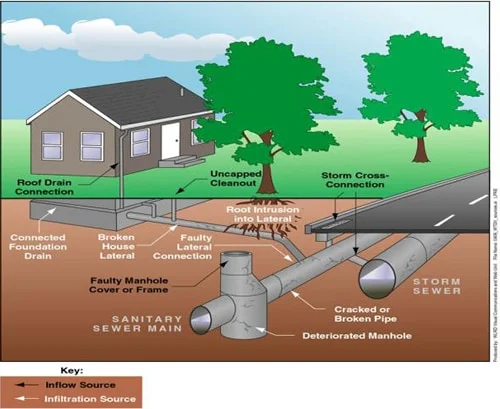
A municipal sewer network is a public utility system operated and maintained by your local city or county government. Rather than treating wastewater on your personal property, your home connects to a massive underground network of municipal pipes that service an entire community.
In a city sewer setup, all household drains feed into a single main line known as a private sewer lateral. This lateral pipe carries wastewater away from your house, underneath your yard, and connects directly to the public sewer main running beneath the street.
Once waste enters the public main, it flows via gravity or mechanical lift stations through miles of municipal infrastructure to a centralized wastewater treatment facility. At the treatment plant, the sewage undergoes rigorous mechanical, biological, and chemical purification processes to remove contaminants, pathogens, and solid particles before the treated effluent is discharged into local waterways.
Homeowners connected to city sewer pay a recurring utility fee, often billed alongside their municipal water service, to fund the operation, maintenance, and expansion of the public treatment facilities.
Financial Breakdown: Upfront Costs vs. Long-Term Expenses
When evaluating septic tank vs city sewer options, finances play a decisive role. The two systems distribute costs in opposite ways: septic requires significant capital upfront with minimal ongoing expenses, whereas city sewer features low entry costs paired with perpetual monthly bills.
Septic System Expenses
- Installation: Installing a standard conventional gravity septic system typically costs between $5,000 and $10,000. Complex engineered systems or aerobic treatment units required in areas with poor soil drainage can exceed $15,000 to $25,000.
- Monthly Fees: There are zero monthly bills. Once the system is installed, you do not pay a utility company for waste disposal.
- Periodic Maintenance: The primary recurring expense is professional tank pumping, which typically costs between $300 and $600 every three to five years depending on household size and tank capacity.
- Replacement Costs: If a drainfield fails due to age or poor maintenance, replacing it can represent a major financial investment.
City Sewer Expenses
- Connection Fees: If you are connecting a new build to an existing sewer main, cities charge connection or “tap” fees, generally ranging from $1,000 to $5,000.
- Monthly Utility Bills: Homeowners pay regular utility charges based on either a flat monthly rate or a calculation derived from indoor water consumption. These bills typically run between $40 and $120 per month, adding up to thousands of dollars over decades.
- Maintenance Costs: The municipality manages the treatment plants and main collection pipes. However, the homeowner remains solely responsible for repairing or replacing the private lateral line connecting the house to the street.
Maintenance and Homeowner Responsibilities
The division of labor is one of the most practical differences between private septic and public sewer systems.
Maintaining a Septic System
With a septic tank, you are the plant manager of your own personal wastewater facility. Keeping it healthy requires mindfulness about what goes down your drains:
- Schedule Regular Pumping: Solid sludge must be pumped out before it accumulates to the point where it overflows into the drainfield and causes soil clogging.
- Protect the Bacterial Balance: Avoid flushing harsh chemicals, excessive bleach, antibacterial soaps, and paint thinners, as these kill the beneficial bacteria needed to break down solids.
- Watch What You Flush: Only human waste and standard toilet paper should enter the system. Never flush wipes, feminine products, paper towels, dental floss, or cat litter.
- Limit Garbage Disposal Usage: Heavy food scrap disposal adds excessive solids to the tank, requiring more frequent pumping schedules.
- Protect the Drainfield: Never park vehicles, construct outbuildings, or plant deep-rooted trees over your absorption field.
Maintaining a City Sewer Connection
City sewer systems require significantly less daily thought, but they are not entirely maintenance-free:
- Lateral Line Integrity: The pipe running from your foundation to the public main can crack, shift, or become invaded by tree roots. If this lateral line collapses or clogs, clearing or replacing it is your financial responsibility.
- Preventing Blockages: While city sewers are more forgiving than septic tanks, flushing foreign objects or pouring cooking grease down kitchen drains can still create severe blockages inside your home’s main sewer stack.
Reliability, Power Outages, and Environmental Impact
Examining how each system behaves during emergencies and environmental conditions highlights further structural distinctions.
Environmental Footprint
Septic systems offer an environmentally friendly, closed-loop cycle when properly maintained. They naturally treat wastewater on site and return moisture directly to local underground aquifers without the massive energy consumption and chemical processing required by municipal treatment plants. However, a neglected or failing septic tank can leak untreated sewage into nearby waterways, posing health hazards to local ecosystems.
City sewer systems reduce localized groundwater contamination risks in densely populated urban centers. By funneling all waste to an industrial plant, municipalities ensure uniform water quality testing. The trade-off is the large carbon and energy footprint required to power massive treatment infrastructure.
Performance During Severe Weather and Outages
Standard gravity-fed septic systems continue working seamlessly during electrical power outages because they rely entirely on natural gravitational flow. If your septic system uses an electric effluent pump to transport liquid uphill, you must limit water usage until power returns.
City sewer lines generally function during power outages because municipal facilities utilize industrial backup generators. However, extreme storms can cause municipal stormwater infiltration, occasionally leading to citywide sewer line backups that force untreated waste back up into residential basement drains.
Evaluating Septic Tank vs City Sewer for Homebuyers
When shopping for a home, understanding the structural differences in a septic tank vs city sewer setup allows you to budget accurately and avoid unexpected plumbing surprises.
If you are buying a home with a septic tank, always demand a comprehensive septic inspection from a licensed plumbing professional before closing. Standard home inspectors rarely perform full camera inspections of the tank interior or evaluate drainfield absorption conditions.

Professional Plumbing Care for Your Wastewater System
Whether your property relies on a private onsite septic setup or connects to a public municipal main, your home’s plumbing network requires experienced professional attention when problems develop. Issues such as slow drains, foul sewage odors, bubbling toilets, or soggy patches in the yard indicate that your drainage infrastructure needs immediate evaluation.
Property owners in Sapulpa, Tulsa, and surrounding Oklahoma communities trust the expert team at Wooten Plumbing for dependable residential and commercial plumbing solutions. From detailed drain clearing and sewer camera inspections to complete pipe repairs and septic tank services, their certified plumbers provide transparent flat-rate pricing and reliable workmanship to keep your home’s wastewater flowing smoothly.
Making the Right Choice for Your Property
Ultimately, weighing septic tank vs city sewer comes down to your property location, budget preferences, and comfort level with routine home maintenance. City sewer provides convenient, hands-off utility service in exchange for monthly fees, while septic systems offer independence and long-term utility savings for homeowners willing to practice regular care.
By staying proactive with inspections, using water responsibly, and partnering with qualified local plumbing professionals like Wooten Plumbing, you can ensure your home’s plumbing system remains safe, sanitary, and reliable for decades to come.